

The Ultimate Guide to Industrial Water Monitoring: Why It Matters More Than Ever
What Is Industrial Water Monitoring?
Industrial water monitoring is the systematic analysis of water used in industrial processes to ensure quality, compliance, safety, and efficiency. This involves testing for parameters such as pH, turbidity, conductivity, chlorine, ammonia, and other chemical and physical constituents that impact performance, safety, and environmental compliance.
From factories to power plants, water is a vital resource and monitoring it is not just good practice, it’s essential for sustainability and overall operation.
Why Industrial Water Monitoring Is Critical
1. Ensures Product Quality:
Industries like food processing, pharmaceuticals, and electronics rely on Ultrapure Water (UPW), which is purer than drinking or lab-grade water often at 18.2 MΩ·cm resistivity. Even a slight trace of contaminants/particle can compromise product integrity and quality which could lead to unsafe medication for pharmaceutical and defective chips in electronics.
2. Prevents Equipment Damage:
Corrosive or hard water can lead to scaling, rust, and fouling in boilers, cooling towers, and pipelines. Monitoring helps protect industrial assets and prevent biological/chemical contamination.
3. Supports Regulatory Compliance:
Regulated under the Sewage and Drainage Act, discharging of wastewater into public sewers must meet Trade Effluent Discharge Standards. Non-compliance can result in fines, permit revocation, or enforcement actions.
4. Optimises Process Efficiency:
By maintaining consistent water quality, industries can maximise efficiency and reduce operational downtime due to water-related issues.
5. Protects Human Health and Safety:
In sectors where water is used for cleaning or comes in contact with products, proper monitoring safeguards end users and employees.
Types of Industrial Water and Their Applications
Different industrial processes require different water qualities and testing priorities. Understanding these distinctions is key to choosing the right monitoring system.
| Type of Industrial Water | Application |
|---|---|
Process Water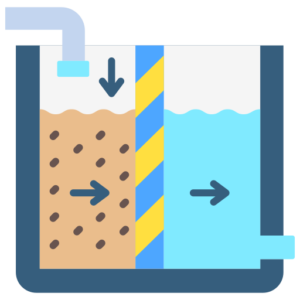 |
Used directly in production e.g., in food, chemicals, electronics, pharma |
Cooling Water |
Circulates in cooling towers, chillers, or heat exchangers |
Boiler Feed Water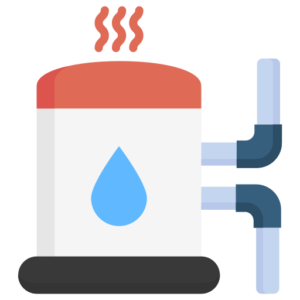 |
Treated water used to generate steam in boilers |
Rinse Water |
Used for cleaning products or equipment (e.g., in semiconductors, pharma) |
Wastewater/Effluent |
Used water that must be treated before discharge or reuse |
Choosing the Right Water Quality Monitoring Solution: What Should You Be Checking?
The type of water quality monitoring instruments depends on the water source and its application. Here are key water quality parameters commonly monitored in Industrial Water:
| Parameter | Why It Matters |
|---|---|
| pH | Affects corrosion, scaling, and chemical reactions |
| Conductivity | Indicates dissolved solids and ionic content |
| Turbidity | Reflects clarity and presence of suspended solids |
| Chlorine (Free/Total) | Ensures disinfection efficiency and safety |
| Dissolved Oxygen | Critical for biological treatment processes |
| Ammonia / Nitrates | Important for water quality and compliance |
| Hardness | Prevents scaling in pipes and equipment |
| Heavy Metals | Required for environmental discharge and product quality control |
| BOD/COD | Measures organic pollution in wastewater |
Types of Water Quality Monitoring Instruments in the market
Depending on the complexity and frequency of monitoring, users can choose from several types of kits and equipment:
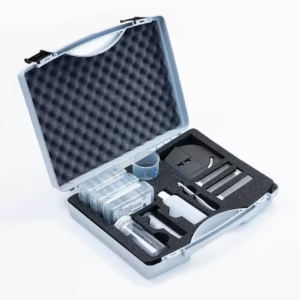 |
1. Visual Comparator Test Kits
|
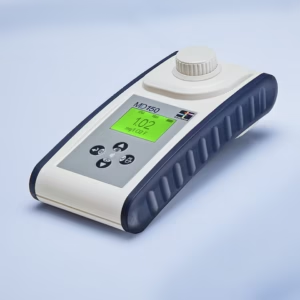 |
2. Photometers
|
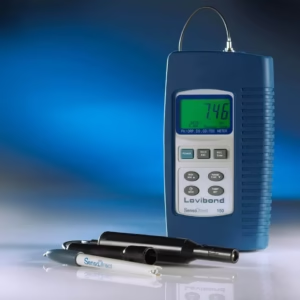 |
3. Electrochemical Meters
|
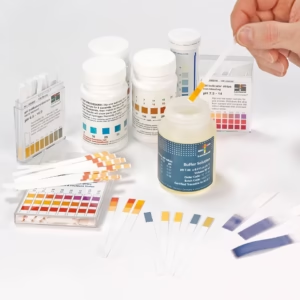 |
4. Test Strips
|
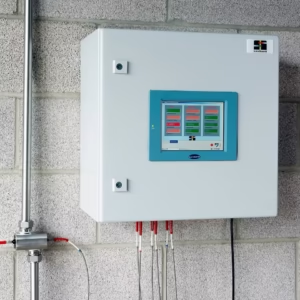 |
5. Online Water Quality Monitoring Systems
|
Finding the Right Fit: Don’t Compromise on Water Monitoring
Selecting the right water quality monitoring method and instruments ensures compliance, reduces waste, and protects your bottom line. While basic kits might provide ease of usability often used for quick checks on site, it offers low precision and it’s not suitable for data logging. Industries operating at scale or under strict regulations will often require photometric or online monitoring system that allows them to monitor water continuously with high precision suitable for audits, compliance and long-term trend analysis.
Industrial water monitoring is not a one-size-fits-all solution. It often requires a tailored approach that considers your process, water source and quality objective. A mismatch between your testing needs and tools can lead to poor decisions, penalties, or production loss.